Why the Slow Things Are Quietly Winning
For years, faster was almost always considered better.
Faster internet. Faster deliveries. Faster replies. Faster careers. Faster workouts. Faster ways to learn, cook, shop, travel, and even relax.
Speed became a symbol of progress.
But lately, something interesting has been happening.
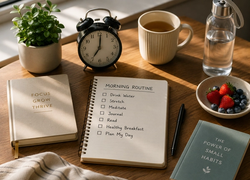
While technology continues to accelerate, many people are quietly moving in the opposite direction. They’re reading physical books instead of endless online articles. Cooking meals from scratch. Taking long walks without headphones. Spending weekends gardening, baking, hiking, or writing by hand.
It’s not because these activities are more efficient.
It’s because they offer something speed often can’t: presence.
We’re starting to feel the cost of constant acceleration
Modern life rarely gives us time to pause.
Notifications arrive around the clock. Work follows us home. News updates never stop. Entertainment is available instantly, and there’s always another video, another email, or another message waiting.
At first, this constant availability felt exciting.
Now, for many people, it simply feels exhausting.
When every part of life moves at high speed, even moments that are supposed to feel restful can begin to feel rushed.
The result isn’t just physical fatigue.
It’s mental fatigue—the feeling that your attention is always being pulled somewhere else.
Slow experiences ask something different of us
The activities many people are rediscovering have one thing in common.
They can’t really be rushed.
You can’t speed-read a meaningful novel and expect the same experience.
A conversation with a close friend unfolds at its own pace.
Bread rises when it’s ready.
Plants grow gradually.
Learning an instrument takes repetition.
These experiences require patience, but they also reward it.
Instead of chasing constant stimulation, they invite us to focus on one thing at a time.
In a culture built around multitasking, that’s becoming surprisingly refreshing.
Slowing down doesn’t mean falling behind
One reason people resist slowing down is the fear of becoming less productive.
We worry that if we stop moving, everyone else will get ahead.
But slowing down isn’t the same as giving up ambition.
It means recognizing that not every part of life benefits from maximum speed.
Some decisions deserve careful thought.
Some conversations shouldn’t be rushed.
Some weekends don’t need a packed itinerary.
Choosing a slower pace in certain areas can actually make us more focused, more creative, and more present in the moments that matter.
The slow things create deeper memories
Think back to the moments you remember most clearly.
They’re probably not the times you answered emails quickly or finished your to-do list ahead of schedule.
More often, they’re ordinary moments that unfolded naturally.
A holiday meal that lasted for hours.
A rainy afternoon spent reading.
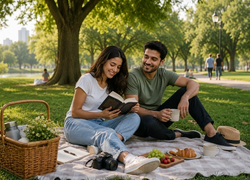
A long walk with someone you love.
Learning a recipe from a grandparent.
Watching a sunset without checking your phone.
These experiences stay with us because they allow us to fully inhabit the moment instead of constantly thinking about the next one.
The slower the experience, the more space there is to notice it.
Convenience is wonderful—but it doesn’t replace meaning
There’s nothing wrong with making life easier.
Technology saves time in countless ways, and many modern conveniences genuinely improve our daily lives.
The question is what we do with the time we save.
If every minute gained simply gets filled with more work, more scrolling, or more obligations, convenience doesn’t actually make life feel lighter.
But if that extra time is spent on relationships, creativity, rest, or meaningful experiences, technology becomes what it was always meant to be: a tool rather than the center of our lives.
The goal isn’t to reject convenience.
It’s to use it wisely.
The future might be slower than we expect
As artificial intelligence, automation, and smart technology continue to handle more routine tasks, our most valuable experiences may become the ones that can’t be automated.
A handwritten letter.
A meal shared with friends.
A conversation without interruptions.
A walk through nature.
Creating something with your own hands.
These moments aren’t valuable because they’re efficient.
They’re valuable because they’re deeply human.
Perhaps that’s why the slow things are quietly winning.
Not because the world itself is slowing down, but because more people are realizing that a meaningful life isn’t measured by how quickly they move through it.
Sometimes, the richest experiences are the ones that ask us to slow down enough to truly notice them.