The Hidden Cost of Optimizing Everything
We’re living in the age of optimization.
There are apps that promise to improve your sleep, trackers that measure your workouts, planners that organize every hour of your day, and endless advice on how to eat better, work smarter, save more money, and become the best possible version of yourself.
On the surface, this seems like progress.
After all, who wouldn’t want to be healthier, more productive, or more efficient?
But somewhere along the way, optimization stopped being a tool and started becoming a lifestyle. And when every part of life becomes something to improve, it’s easy to forget that some things are meant to be enjoyed, not measured.
Productivity has expanded into every corner of life
There was a time when productivity was mostly associated with work.
Now it follows us everywhere.
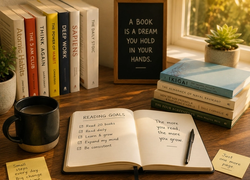
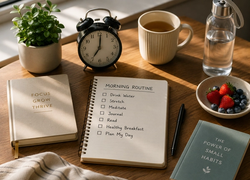
Morning routines are optimized. Workouts are tracked. Reading goals are quantified. Vacations become opportunities to “maximize experiences.” Even hobbies are often approached with the mindset of getting better, faster, or more efficient.
Without realizing it, many people begin treating themselves like ongoing projects that are never quite finished.
Instead of asking, Am I enjoying this?, we ask, Am I doing this well enough?
That shift changes the way we experience everyday life.
Efficiency isn’t always the same as fulfillment
Optimizing something usually means making it faster or more efficient.
That works well for commuting, budgeting, or organizing your inbox.
But not everything valuable benefits from becoming more efficient.
A long dinner with friends isn’t better because it finishes sooner.
A walk through the park doesn’t need to achieve a particular outcome.
Reading a novel isn’t a race.
Some of life’s most meaningful experiences are valuable precisely because they slow us down.
When we start measuring every activity by its productivity, we risk overlooking the simple pleasure of doing something for its own sake.
Self-improvement can quietly become self-criticism
Wanting to grow is healthy.
Most people naturally want to learn new skills, improve their health, or build better habits.
The problem begins when self-improvement turns into the belief that who you are today is never enough.
There is always another book to read.
Another habit to build.
Another course to take.
Another goal to achieve.
Another morning routine to perfect.
Instead of celebrating progress, we move the finish line further away.
The pursuit of becoming better can become exhausting if it leaves no room to appreciate the person you’ve already become.
Not every minute needs to be productive
Many people struggle to relax because they’ve started viewing rest as something that must be justified.
If they’re watching a movie, they wonder whether they should be reading instead.
If they’re sitting quietly, they feel guilty for not answering emails or cleaning the house.
Even leisure starts to feel like another item on the to-do list.
But rest isn’t wasted time.
It’s what allows us to think more clearly, recover our energy, and enjoy the lives we’re working so hard to improve.
A life filled only with optimization eventually becomes one that feels strangely mechanical.
Some of the best moments can’t be measured
Not everything that matters fits into a graph or a spreadsheet.
You can’t quantify the feeling of laughing until your stomach hurts with old friends.
There’s no productivity score for watching the sunset, cooking with family, or spending an afternoon doing absolutely nothing.
Some experiences become meaningful precisely because they have no measurable outcome.
They remind us that life isn’t a competition to collect the highest number of achievements, habits, or completed goals.
It’s a collection of moments that, together, create a life worth living.
Use optimization as a tool, not an identity
There’s nothing wrong with wanting to improve.
Tracking your finances can help you save more. Building healthier habits can improve your well-being. Organizing your schedule can reduce stress.
The problem isn’t optimization itself.
It’s believing that every part of your life needs to be optimized all the time.
Sometimes the smartest choice is the efficient one.
Other times, the best choice is the slower, messier, more human one.
A conversation that goes on longer than planned.
A weekend without a schedule.
A hobby you’re not trying to monetize.
A meal enjoyed without checking calories or taking photos.
Those moments may not make you more productive, but they often make life richer.
Perhaps the goal isn’t to optimize every hour of your day.
Perhaps it’s to build a life where efficiency creates more space for the things that don’t need improving at all.