The Health Habits That Are Worth the Hype (And the Ones That Aren’t)
Every year brings a new wave of health trends.
One month it’s ice baths. The next it’s green powders, detox drinks, wearable devices, expensive supplements, or a morning routine that’s supposed to transform your life before 7 a.m. Social media makes it seem as though there’s always a new habit that promises to help you live longer, lose weight faster, or become healthier overnight.
Some of these trends are supported by good evidence. Others are driven more by marketing than science.
The challenge is knowing which habits are genuinely worth your time and money. The good news is that improving your health usually doesn’t require complicated routines or expensive products. In fact, many of the habits with the biggest impact are also the simplest.
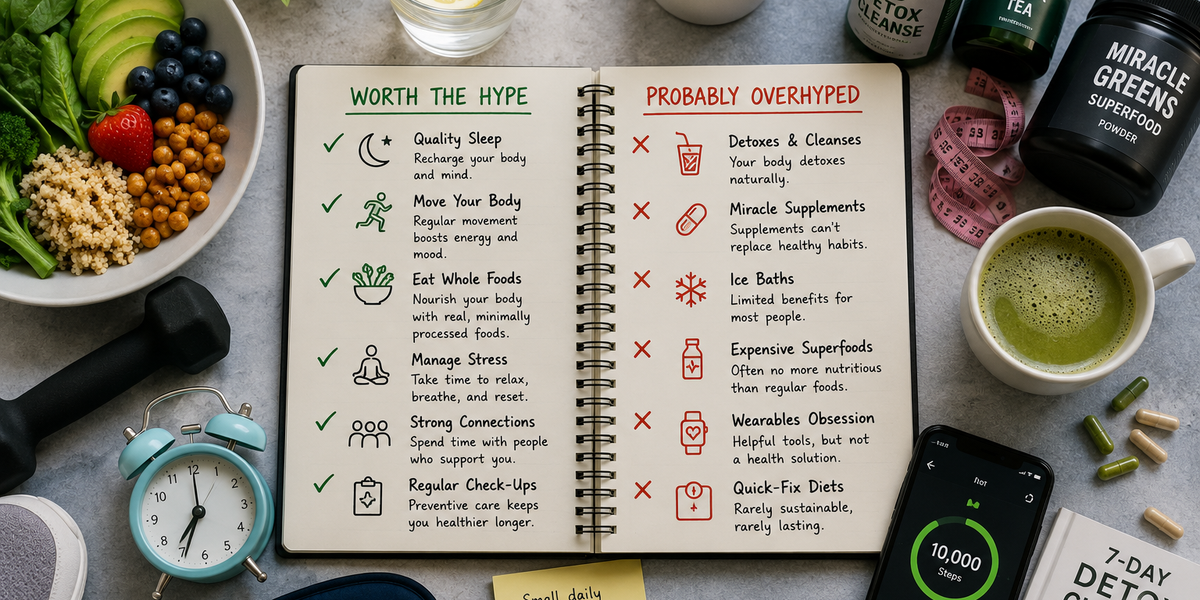
Worth the hype: Prioritizing sleep
If there is one health habit that deserves more attention than almost any other, it’s getting enough quality sleep.
Sleep plays a vital role in nearly every system in the body. It supports memory, concentration, immune function, heart health, hormone regulation, mood, and physical recovery. Yet despite its importance, it’s often the first thing people sacrifice when life becomes busy.
No supplement, productivity hack, or expensive wellness product can replace consistently getting enough sleep. Establishing a regular bedtime, limiting screen time before bed, and creating a cool, dark, and quiet sleeping environment may not sound exciting, but these habits are supported by decades of research and can have a profound impact on your overall health.
Worth the hype: Moving your body regularly
Exercise doesn’t have to be intense to improve your health.
Regular movement helps reduce the risk of many chronic diseases while improving cardiovascular fitness, muscle strength, mobility, balance, and mental well-being. It can also boost energy levels, improve sleep, and reduce stress.
The key isn’t finding the perfect workout—it’s finding one you’ll actually continue doing. Walking, cycling, swimming, dancing, gardening, strength training, or simply being more active throughout the day can all contribute to better health. Consistency matters far more than perfection.
Worth the hype: Eating more whole foods
Nutrition advice changes constantly, but one recommendation has remained remarkably consistent over the years: most people benefit from eating more whole, minimally processed foods.
Fruits, vegetables, legumes, whole grains, nuts, seeds, lean proteins, and healthy fats provide nutrients that support long-term health and help reduce the risk of many chronic conditions.
This doesn’t mean you have to eliminate desserts, pizza, or your favorite comfort foods. Healthy eating isn’t about perfection or restriction. It’s about making nutritious foods the foundation of your diet while leaving room for flexibility and enjoyment.
Probably overhyped: Detoxes and cleanses
Many products claim to detox your body or eliminate harmful toxins through juices, teas, or restrictive eating plans.
For most healthy people, that’s simply not how the body works.
Your liver, kidneys, lungs, and digestive system already perform this function naturally every day. There’s very little scientific evidence that expensive detox products provide the dramatic health benefits they’re often advertised to deliver.
In some cases, extreme cleanses may even leave people feeling tired, hungry, or nutritionally unbalanced. For most people, drinking enough water, eating a balanced diet, and getting adequate sleep are far more effective ways to support the body’s natural processes.
Probably overhyped: Miracle supplements
The wellness industry offers countless supplements that promise better focus, more energy, stronger immunity, improved longevity, and faster weight loss.
While certain vitamins and minerals are important for people with diagnosed deficiencies or specific medical conditions, most supplements aren’t a shortcut to good health.
A supplement can’t compensate for consistently poor sleep, an unbalanced diet, chronic stress, or a lack of physical activity. Before starting any new supplement, especially if you take medication or have an existing health condition, it’s always a good idea to speak with a healthcare professional.
In many cases, improving your everyday habits will have a much greater impact than adding another supplement to your routine.
The healthiest habits are usually the least exciting
If you spend enough time online, it’s easy to believe that optimal health depends on buying the latest gadget or following the newest trend.
In reality, most long-term health improvements come from habits that are almost boring in their simplicity. Sleeping enough, moving regularly, eating a balanced diet, managing stress, staying socially connected, and keeping up with recommended health check-ups consistently provide far greater benefits than most viral wellness trends.
These habits rarely become social media sensations because they aren’t new or dramatic—but that doesn’t make them any less effective.
Focus on consistency, not trends
There’s nothing wrong with trying a new fitness class or experimenting with a wellness trend that genuinely interests you.
The problem begins when we believe that lasting health depends on constantly chasing the next miracle solution. It rarely does.
The healthiest people usually aren’t the ones trying every new trend that appears online. More often, they’re the ones who consistently practice the basics, year after year.
Good health isn’t built through one extraordinary habit.
It’s built through ordinary habits repeated consistently over time. Those daily choices may not look impressive on social media, but they have something much more valuable—they’re sustainable, evidence-based, and capable of making a real difference throughout your life.