The Digital Habits of People Who Seem Calm Online
Some people seem completely unbothered by the constant noise of the internet.
They’re informed without being overwhelmed. They reply to messages without feeling available 24/7. They use social media without appearing consumed by it. Somehow, they stay connected without looking constantly distracted.
It’s tempting to think they’re simply more disciplined, but in most cases, they’re not. They’ve just built digital habits that protect their attention instead of giving it away.
The good news is that these habits aren’t complicated—and you don’t have to quit technology to adopt them.
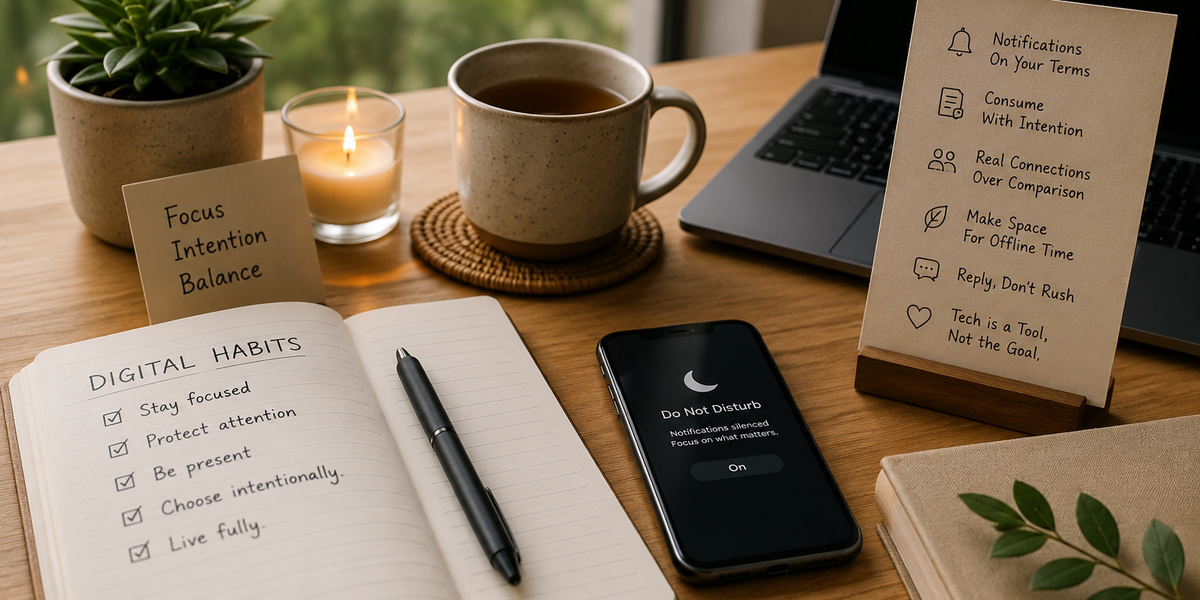
They don’t treat every notification as urgent
One of the biggest differences between calm and overwhelmed people is how they respond to interruptions.
People who always seem calm rarely allow their phones to dictate their attention.
Instead of leaving every notification turned on, they reserve alerts for the things that genuinely matter, such as phone calls, messages from family, calendar reminders, or important work communications.
Everything else can wait until they decide to check it.
This simple shift changes the relationship with technology. Rather than constantly reacting to their devices, they choose when to engage.
As a result, they spend more time focusing on what they’re doing and less time jumping between tasks.
They consume information with intention
The internet offers an endless stream of news, opinions, videos, and updates. Without boundaries, it’s easy to spend hours absorbing information that doesn’t improve your life.
People who appear calm online tend to be selective about what they consume.
Instead of checking multiple news apps throughout the day, they might read a trusted source once in the morning or evening.
Instead of scrolling through dozens of social media accounts, they follow creators and communities that genuinely interest or inspire them.
They understand that being informed doesn’t require consuming every headline or reacting to every trending topic.
Quality matters more than quantity.
They don’t compare their everyday lives to someone else’s highlight reel
Social media makes comparison almost unavoidable.
Vacations, promotions, fitness milestones, perfectly decorated homes, and carefully edited photos can create the impression that everyone else has life figured out.
Calm people remember that social media is a curated snapshot, not a complete picture.
They know that people naturally share achievements more often than struggles, and that algorithms tend to reward content that captures attention rather than reflects reality.
Because of this, they’re less likely to measure their own lives against what they see online.
They enjoy the content without assuming it tells the whole story.
They make space for being offline
People who seem relaxed around technology usually have parts of their day that don’t involve screens.
That might mean walking without checking their phones, reading before bed, eating meals without scrolling, or simply letting themselves experience a few quiet moments without reaching for a device.
These breaks aren’t about rejecting technology.
They’re about giving the mind time to reset.
Even short periods away from constant updates can reduce the feeling of being mentally overloaded and make it easier to return to work or conversations with more focus.
They choose conversation over constant availability
Being connected doesn’t mean responding immediately.
Many calm people have learned that it’s okay to reply when they have the time and attention to do so.
They don’t feel pressured to answer every message within minutes, especially when they’re working, spending time with family, or resting.
In fact, delaying a response until you can give someone your full attention often leads to better conversations.
Setting healthy expectations around communication can reduce stress for both you and the people you’re talking to.
They remember that technology is a tool
It’s easy to forget why we picked up our phones in the first place.
A quick weather check turns into social media. A message leads to online shopping. One video becomes twenty.
People who maintain a healthier relationship with technology often pause before opening an app and ask themselves what they actually want to do.
If they’re checking directions, they check directions.
If they’re replying to a message, they reply and move on.
They’re less likely to let algorithms decide how they spend the next half hour because they approach technology with intention rather than habit.
Calm online starts with small choices
The people who seem calm online aren’t necessarily spending less time on their devices than everyone else.
More often, they’re spending that time differently.
They’ve learned to protect their attention, be selective about what they consume, and create small boundaries that prevent technology from taking over every spare moment.
None of these habits require deleting social media or disconnecting from the internet.
Instead, they remind us that feeling calmer online isn’t about using technology less—it’s about using it more intentionally.
Over time, those small choices add up to something much bigger: a digital life that supports your well-being instead of constantly competing for your attention.