How to Take Better Photos With Just Your Phone
You don’t need an expensive camera to take beautiful photos.
Modern smartphones are incredibly powerful, with cameras capable of producing images that would have seemed impossible just a few years ago. While professional equipment still has its place, the biggest difference between an average photo and a great one usually isn’t the device—it’s how it’s used.
Whether you’re capturing a vacation, a family gathering, your morning coffee, or a stunning sunset, a few simple techniques can instantly improve your photos without downloading another app or buying new gear.
Let light do most of the work
If there’s one thing that makes the biggest difference to a photo, it’s lighting.
Natural light is almost always the most flattering option. Whenever possible, position your subject near a window or take photos outdoors during the early morning or late afternoon, when the light is softer and warmer.
Midday sunlight can create harsh shadows, while dim indoor lighting often results in grainy or blurry images.
If you’re indoors, avoid relying solely on your phone’s flash. It tends to flatten faces and create unnatural lighting. Instead, move closer to a window or switch on additional lights if needed.
Good lighting can make even a simple snapshot look far more professional.
Clean your camera lens
It sounds almost too simple, but it’s one of the most overlooked photography tips.
Your phone spends most of its time in pockets, bags, or on tables, collecting fingerprints, dust, and smudges along the way.
Before taking a photo, quickly wipe the lens with a clean microfiber cloth or a soft piece of fabric.
It takes only a few seconds but can dramatically improve sharpness, contrast, and overall image quality.
Many people assume their phone camera isn’t very good when the real issue is simply a dirty lens.
Think about composition before you tap
A great photo isn’t just about what’s in the frame—it’s also about what isn’t.
Instead of placing your subject directly in the center every time, experiment with different angles and framing.
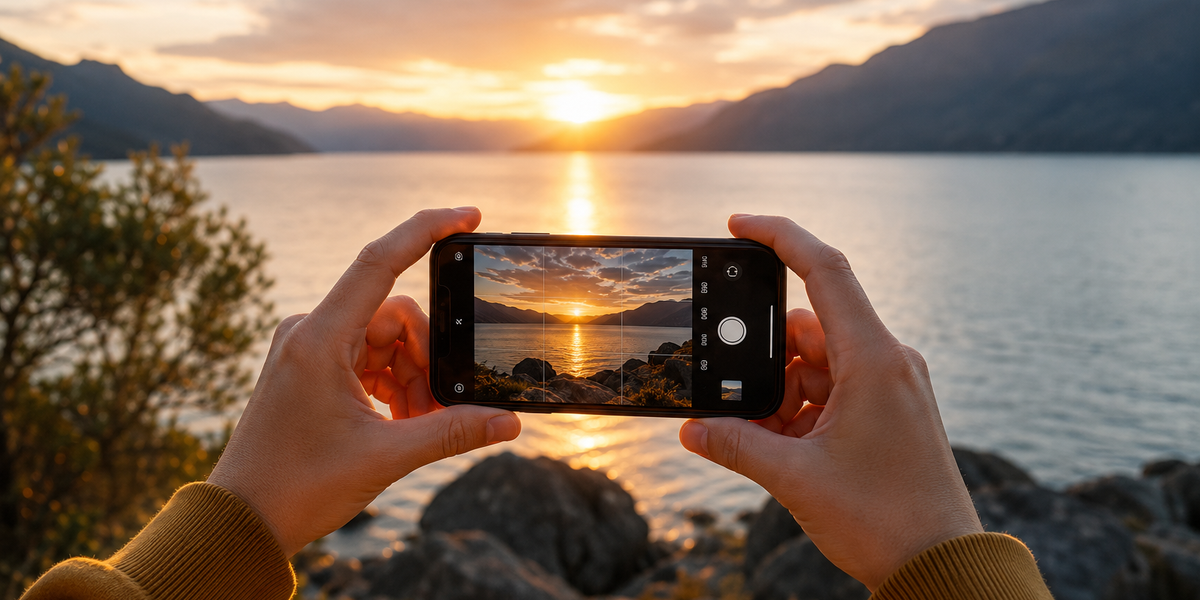
Many phones offer a grid option in the camera settings. Turning it on can help you use the “rule of thirds,” a simple photography guideline that places your subject slightly off-center for a more balanced and interesting image.
It’s also worth checking the background before taking the photo.
A messy room, distracting signs, or random objects can draw attention away from your subject. Sometimes taking one small step to the left or right makes all the difference.
Get closer instead of zooming
Digital zoom often reduces image quality because it enlarges the picture rather than capturing additional detail.
Whenever possible, move physically closer to your subject instead of pinching to zoom.
You’ll usually end up with a sharper, more detailed photo.
If your phone has multiple camera lenses, such as wide-angle or telephoto options, use those instead of digital zoom whenever appropriate.
You’ll preserve more detail while creating a more natural-looking image.
Take multiple shots
Professional photographers rarely rely on a single photo.
Instead, they take several images with small adjustments to angle, lighting, or expression before choosing the best one.
You can do exactly the same with your phone.
Take a few extra photos instead of stopping after the first shot.
Move slightly, change your perspective, ask someone to look in a different direction, or wait for a better expression.
It only takes a few seconds and significantly increases the chances of capturing a photo you’ll actually want to keep.
Edit lightly, not excessively
Editing is part of modern photography, but subtle adjustments usually produce the best results.
Most built-in photo editors allow you to improve brightness, contrast, shadows, warmth, and cropping with just a few taps.
Small changes can make a photo feel more polished without making it look artificial.
Try to avoid over-saturating colors, applying heavy filters, or sharpening images too aggressively.
The goal is to enhance what was already there—not completely change it.
The best camera is the one you have with you
One reason smartphone photography has become so popular is simple: your phone is almost always within reach.
Some of life’s best moments happen unexpectedly—a child’s laugh, a beautiful sunset, a spontaneous road trip, or a gathering with friends.
The most memorable photos aren’t always technically perfect.
They’re the ones that capture genuine emotion, meaningful experiences, and moments you’ll want to remember years from now.
You don’t need professional equipment to create those memories.
With good lighting, thoughtful composition, a clean lens, and a little patience, your phone is more than capable of taking photos you’ll be proud to share—and even happier to look back on.